
Last updated October 30, 2026
 Kitchen remodeling
 Bathroom remodeling
 Home additions & ADU
 Roofing
 Windows & doors
 Driveway & pavers
 Fence
Free written scope consultation - allowances, timeline, and change-order rules on paper before a single trade is scheduled
General Contractor Troubleshooting: Common Problems and How to Fix Them
Here’s a truth most homeowners learn too late: a cracked stucco finish three months after completion isn’t a stucco problem. It’s usually a framing moisture or substrate problem the GC’s painter covered over. That distinction matters more than most people in Indio realize, because knowing whether you’re looking at a finish failure or a structural warning changes every conversation you have with your contractor. This guide walks through the most common general contractor problems, traces each one to its actual root cause, and gives you a clear path to a fix that holds.
Styles & brands we work with
Quick Answer
Most general contractor problems fall into five categories: scope creep from unwritten change orders, subcontractor accountability gaps, permit and inspection delays, material failures or substitutions, and payment disputes including mechanics liens. The fix for nearly all of them starts with the same step: get the agreement, the change, and the release in writing before work continues. If you’re in Indio and dealing with a problem that’s already active, stop making verbal agreements today and start building the paper trail. For how to hire a construction contractor in Indio: a step-by-step guide, see our dedicated resource.
Table of Contents
- How to Diagnose a GC Problem by Root Cause, Not Symptom
- What’s Actually Causing Your Project Delay
- The Paper Trail You Need at Every Phase
- Change Orders: Where Cost Overruns Are Born
- Finish Failures in Desert Climates: Who’s Accountable for What
- Subcontractor Filed a Mechanics Lien Even Though You Paid: Now What
- Brand Substitutions and Material Swaps: How to Catch Them Early
- Common Mistakes to Avoid
- When to Call a Professional
- Frequently Asked Questions
- The Bottom Line
How to Diagnose a GC Problem by Root Cause, Not Symptom
The way a problem shows up is rarely the way it started. Water staining on a ceiling reads as a roof problem. It might be a roof problem. It might also be a vent boot that wasn’t sealed when the roofer installed the underlayment, or a valley that was flashed incorrectly because the original plan didn’t account for the pitch change. Indio homeowners deal with this constantly because desert construction cycles put a lot of stress on materials that expand and contract through extreme temperature swings.
When we walk a project that’s gone sideways, we work backward from the visible symptom to the decision that produced it. Here’s the diagnostic sequence we use:
- Identify the exact symptom. Not “the paint is failing,” but “the paint is blistering on the south-facing wall above the window line.” Specificity matters because different failures point to different upstream causes.
- Determine which trade last touched that surface. Blistering paint above a window line often traces to a flashing detail the window installer should have addressed before the painter ever opened a can.
- Look for what was covered up. The most expensive problems are the ones buried behind drywall, stucco, or tile. If a finish is failing, ask what’s behind it.
- Ask for the installation record. When was the substrate installed, what were the weather conditions, and who signed off on it? A good GC keeps job logs. A bad one keeps excuses.
- Separate the material problem from the installation problem. Sometimes the product failed. More often, the product was installed incorrectly. Knowing which one you’re dealing with determines who pays to fix it.
A General Contractor in Indio who runs a clean jobsite should be able to walk you through this sequence without getting defensive. If the answer is “we’ll take care of it” with no explanation of what actually happened, you’re being managed, not informed.
What’s Actually Causing Your Project Delay
Project delays in Indio are rarely caused by one thing. They’re usually a stack of small failures: a permit review that sat on someone’s desk, a subcontractor who overbooked, a material order that got placed two weeks late. The frustration for homeowners is that all they see is a quiet jobsite and a calendar that doesn’t move.
Here’s how to tell which delay you’re dealing with, and what your recourse looks like for each:
- Permit office delay. The city is backed up or sent comments back on the plan set. Recourse: ask your GC for the city’s correspondence in writing. A professional contractor tracks permit status and can show you exactly where the file sits. If they can’t produce the trail, the delay may not be the city’s fault.
- Subcontractor delay. The plumber or electrician didn’t show because they’re juggling too many jobs. Recourse: your GC owns the schedule, not the sub. A written schedule with milestone dates gives you leverage to push. No schedule means no accountability.
- Material supply chain delay. Windows from PGT or a specific Cambria slab are backordered and the lead time stretched. Recourse: ask for the original order confirmation with the date. If the order was placed late, that’s on the GC. If the manufacturer slipped, the GC should show you the updated lead time and offer options.
- GC cash flow delay. The contractor pulled crew to another job because the next payment on yours isn’t close enough. Recourse: this is the hardest one to fix because it’s structural. Your best move is a frank conversation about project sequencing and a promise to keep payments tied to completed milestones, not vague progress.
- Weather delay. Yes, even in Indio. Wind shutdowns for crane work, extreme heat limiting concrete pours, and monsoon-season rain all happen. Recourse: a well-written contract has a weather delay clause. Make sure yours does before you sign.
One practical discipline that prevents most delay disputes: insist on a written schedule with names attached to dates. “Framing: week of March 3, lead framer Carlos.” When a date slips, ask which line item slipped and why. If you’re managing a home renovation in Indio, this single habit will save you more grief than any other thing on this page.
The Paper Trail You Need at Every Phase
When disputes happen, the homeowner who can produce the right document wins. The one who can’t leaves the outcome to someone else’s memory. Here’s the minimum paper trail you should have at each phase of the project, and the problem that shows up when you’re missing it:
- Before work starts: Signed contract, scope of work with specified materials by brand name, payment schedule tied to milestones, and a certificate of insurance from the GC naming you as an additional insured. Missing this: you’re arguing about what was included when the first surprise hits.
- At permit approval: The filed plan set and the issued permit card. Missing this: if an inspector flags something, you can’t verify whether the work matches the approved drawings.
- During construction: Signed change orders for every deviation, updated schedule revisions, and written selections for every finish (cabinets, countertops, tile, fixtures). Missing this: the installer installs what they have, not what you chose.
- At each payment: A lien release from the GC and from any subcontractor or supplier who filed a preliminary notice. Missing this: you pay in full, and then a sub files a mechanics lien because the GC never paid them.
- At completion: Final inspection sign-off from the city, a punch list in writing with completion dates, and final lien releases from all parties. Missing this: you don’t actually know the project is legally complete.
This may sound like paperwork for paperwork’s sake. It’s not. It’s the difference between a project that closes clean and one that haunts you for years. When we handle a home remodeling project in Indio, we produce these documents as a matter of course. If your GC acts like any of this is unusual, treat that as a red flag.
Change Orders: Where Cost Overruns Are Born
Most budget blowouts don’t start with a dishonest contractor. They start with an honest one who says “I’ll take care of it” and then charges you more at the end. A change order is simply a written document that records a change in scope, the cost of that change, and the schedule impact. Without one, you’re trusting memory.
The phrase “I’ll take care of it” is the most expensive sentence in construction. It means the GC has decided to absorb a small thing now and bill for it later, or worse, to roll it into the final invoice where it’s harder to contest. Here’s the fix: any change to the project, no matter how small, gets written down before the work happens. The product goes from this:
- Verbal: “Hey, can you also run a gas line for the outdoor kitchen while you’re at it?” “Sure, no problem.” Three weeks later, the invoice shows $1,400 and neither of you agrees on what was actually agreed.
- Written: “Change Order #7: Add 18 linear feet of gas line to the outdoor kitchen stub-out. Cost: $1,400. Schedule impact: two days. Signed by homeowner and GC.” Now the number was agreed to, not discovered.
Change order discipline protects you from scope creep, but it also protects a good contractor from doing free work based on misremembered conversations. It’s a two-way document. Insist on it from day one, and the cost conversation gets easier, not harder.
Finish Failures in Desert Climates: Who’s Accountable for What
Indio’s climate is hard on finishes. Summer highs above 110°F, UV that eats exterior coatings, and soil that shifts with irrigation cycles all work against your paint, stucco, grout, and caulk. But a finish failure is not automatically a climate problem. Most of the time, it’s an installation detail that the climate exposed.
Here are the finish failures we see most often in the Coachella Valley, and which trade actually owns each one:
- Hairline cracks in tile grout at wall-to-floor transitions. This is usually a movement joint problem, not a grout problem. The tile installer should have used a flexible sealant at change-of-plane joints. If they grouted the corners solid, the grout will crack every time the house moves. Accountable trade: tile installer.
- Exterior paint fading or chalking within two years. In Indio, the wrong paint on a south-facing wall will fail fast. But the bigger issue is often improper surface prep or painting over old chalking. Accountable trade: painter, with a caveat that the GC should have specified an appropriate grade for desert exposure.
- Stucco cracking in a grid pattern. Grid-pattern cracking often traces to lath that wasn’t properly fastened or a scratch coat that cured too fast in heat. Accountable trade: stucco contractor, with the GC responsible for scheduling the work to avoid extreme heat.
- Caulk failing at window and door penetrations. Caulk gaps at penetrations are a window installer detail. The juncture between the window flange and the water-resistive barrier has to be sealed correctly before trim goes on. If caulk is failing early, the seal wasn’t done right. Accountable trade: window installer.
- Grout cracking on floor tile over concrete slab. In Indio, slab movement from expansive soils is real. But a tile installer who knows local conditions will use an uncoupling membrane and proper expansion joints. Without them, the tile fails. Accountable trade: tile installer.
The pattern across all five: the finish contractor is accountable for the installation detail, but the GC is accountable for specifying it and inspecting the work before it gets covered. If your GC can’t explain what’s behind the finish, they can’t tell you why it failed.
Subcontractor Filed a Mechanics Lien Even Though You Paid: Now What
A mechanics lien is a legal claim against your property filed by a subcontractor or supplier who says they weren’t paid. Here’s the thing that catches homeowners off guard: you can pay your GC in full, on time, and still get a lien filed against your house if the GC didn’t pass your payment down the chain. The lien attaches to the property, not to the contractor who owes the money.
Here’s the step-by-step of what to do if this happens in Indio:
- Don’t ignore it. A mechanics lien clouds your title. You can’t sell or refinance until it’s resolved. The clock starts the day it’s recorded, and California has strict timelines for enforcement.
- Pull your payment records. Gather every check, every invoice, every receipt showing you paid the GC. This is your evidence.
- Request proof from the sub. Ask the lien claimant for the contract, invoices, and dates of work. You’re establishing whether the claim has any relationship to your project at all.
- Demand lien releases from your GC. Ask the GC to produce signed releases from this sub for every payment you’ve made. If the GC was supposed to release the sub and didn’t, the GC has a problem they need to fix immediately.
- Check whether the sub filed a preliminary notice. In California, a sub or supplier generally must serve a preliminary 20-day notice to preserve lien rights. If they didn’t serve it, their lien may be invalid, and a demand to release it often works.
- Talk to a construction attorney. If the GC won’t resolve it and the lien is valid, you need professional help. The amount at stake is your house’s title, which is more than the lien amount.
The prevention here is simple in theory and easy to skip in practice: collect lien releases from every sub and supplier before you release each payment. A contract that requires conditional and unconditional lien releases as a condition of payment is not overkill. It’s standard practice for anyone who’s seen what happens without it.
Brand Substitutions and Material Swaps: How to Catch Them Early
Your contract says Cambria countertops and Kohler fixtures. The truck shows up with a slab that isn’t Cambria and a vanity that isn’t Kohler. Maybe the GC got a “better deal.” Maybe they upgraded you without asking. Maybe they’re padding margin. Whatever the reason, a material substitution without a written change order is a contract violation, and it’s more common than most homeowners realize.
The fix is to make the spec the contract. Here’s what that looks like in practice:
- Name the brand in the contract. Not “quartz countertops” but “Cambria quartz, color Berwyn, 2cm thickness, eased edge.” Not “kitchen faucet” but “Kohler Artifacts, polished nickel, model K-99262-VS.” When the contract is specific, a swap is obvious.
- Ask for the cut sheet or spec sheet before materials are ordered. A good GC provides manufacturer documentation for every major line item. Check the sheet against what arrives. If they don’t match, stop the install.
- Walk the materials on delivery day. When cabinets arrive, open a box. When tile shows up, verify the dye lot. Five minutes on the front end prevents a five-month fight on the back end.
- Track brand names for fencing and exterior materials too. If you specified a Jerith aluminum fence or a Bufftech vinyl fence and a different manufacturer shows up, that’s a substitution. It might be equivalent. It might not. Either way, it should have been a written change order, not a surprise.
Why does this matter beyond the principle? Because different brands perform differently in Indio’s climate, and different brands have different warranty structures. An impact-rated window from PGT is not interchangeable with an off-brand unit that meets a lower standard. If you specified a product for a reason, preserving that specification protects more than the aesthetic; it protects the performance of the whole assembly.
Common Mistakes to Avoid
- Paying a large deposit before permits are approved. In California, the maximum down payment for a contractor is 10% or $1,000, whichever is less. If you’re paying a big deposit for a project that hasn’t been permitted yet, you’re funding the wrong thing.
- Making verbal change requests and trusting the invoice later. Every verbal change is a future invoice with your name on it. Write it down, price it, sign it. This is the single most common cost-overrun mechanism in Indio remodels.
- Hiring a GC without checking their license with the Contractors State License Board. A quick CSLB lookup confirms the license is active, the workers’ comp insurance is in place, and there are no outstanding discipline actions. Skip the lookup, accept the risk.
- Skipping lien releases to keep the paperwork simple. The simplicity ends when a sub files a lien and your title goes into escrow limbo. Lien releases are not bureaucracy; they’re the receipt for your payment.
- Accepting “it’s normal” as an explanation for cracks, gaps, or failures. Some cracking is normal. Some is not. The difference is knowable, and a good GC can explain it. If the answer is a shrug, get a second opinion.
- Signing a contract that doesn’t name the materials. A contract that says “mid-grade tile” is not a contract; it’s an invitation. Name the product, the brand, the color, and the finish. Your leverage lives in the specifics.
- Letting the contractor manage the only copy of the permit and inspection record. You should have your own copies of the permit card, inspection results, and plan set. When the city closes the file, you want to know it actually closed.
When to Call a Professional
Some problems are fixable with a conversation and a written change order. Others need a professional’s hands before they get worse. If you’re seeing water intrusion at any penetration, structural cracking wider than a dime, electrical problems that trip breakers, or gas-line work that smells wrong, that’s a professional call, not a discussion item. If a subcontractor has filed a mechanics lien or you’ve discovered unpermitted work that’s already been covered by drywall, you need a contractor who’s seen this before and can unpack the scope of the fix without making the problem bigger. Briar Contractors offers free estimates in Indio. Call (833) 467-4442 and we’ll walk the project with you before you commit to anything.
Frequently Asked Questions
The most common problem we see in Indio is undocumented change orders that turn a fixed bid into a balloon payment at the end of the job. The fix is to require a written change order for every deviation from the original contract, signed before the work happens.
Check the California Contractors State License Board website directly, using the license number the contractor gave you. Confirm the license is active, the classification matches the work being done, and the workers’ compensation coverage is current. If the contractor won’t give you a license number, that’s your answer. Call (833) 467-4442 if you want to talk through what a compliant project looks like.
You can withhold payment for work that doesn’t meet the contract specification, but you should document the deficiency in writing and give the contractor a reasonable opportunity to correct it first. Withholding payment without a written notice can trigger a mechanics lien or a breach claim against you.
A typical kitchen or primary bath remodel in Indio runs 8 to 16 weeks depending on scope, permits, and material lead times. A whole-home renovation or addition runs 4 to 12 months. If your contractor gives you a single number with no schedule behind it, ask for the milestone breakdown.
Document the job site condition with photos, gather your contract and payment records, and send a written notice demanding a return to work or a formal termination of the contract. Then contact the CSLB and consider a construction attorney for the recovery path. The most important thing is to secure the site so weather or exposure doesn’t make the damage worse.
Yes, without exception. In California, a subcontractor or supplier can file a lien even if you’ve paid the GC in full, because their claim runs against the property, not against the GC’s invoice. Lien releases from every party for every payment are the only thing that closes that gap. For a full-scope project, this is the difference between a clean close and a title problem.
The Bottom Line
General contractor problems are rarely mysteries if you know where to look. They start in unwritten change orders, unspecified materials, unrecorded payments, and uninspected details that get covered before anyone notices. The fix is not to micromanage your contractor; it’s to build a project where accountability is written down as a matter of course. Specific brand names in the contract, lien releases with every payment, a schedule with named milestones, and change orders before work happens. These four habits prevent most of the problems in this guide. If you’re planning a home project in Indio, start with those habits and the rest of the process gets easier. Call (833) 467-4442 to talk through the scope before you sign anything.
Written by the team at Briar Contractors, serving Indio since 2018. Explore more guides & resources.
See the difference
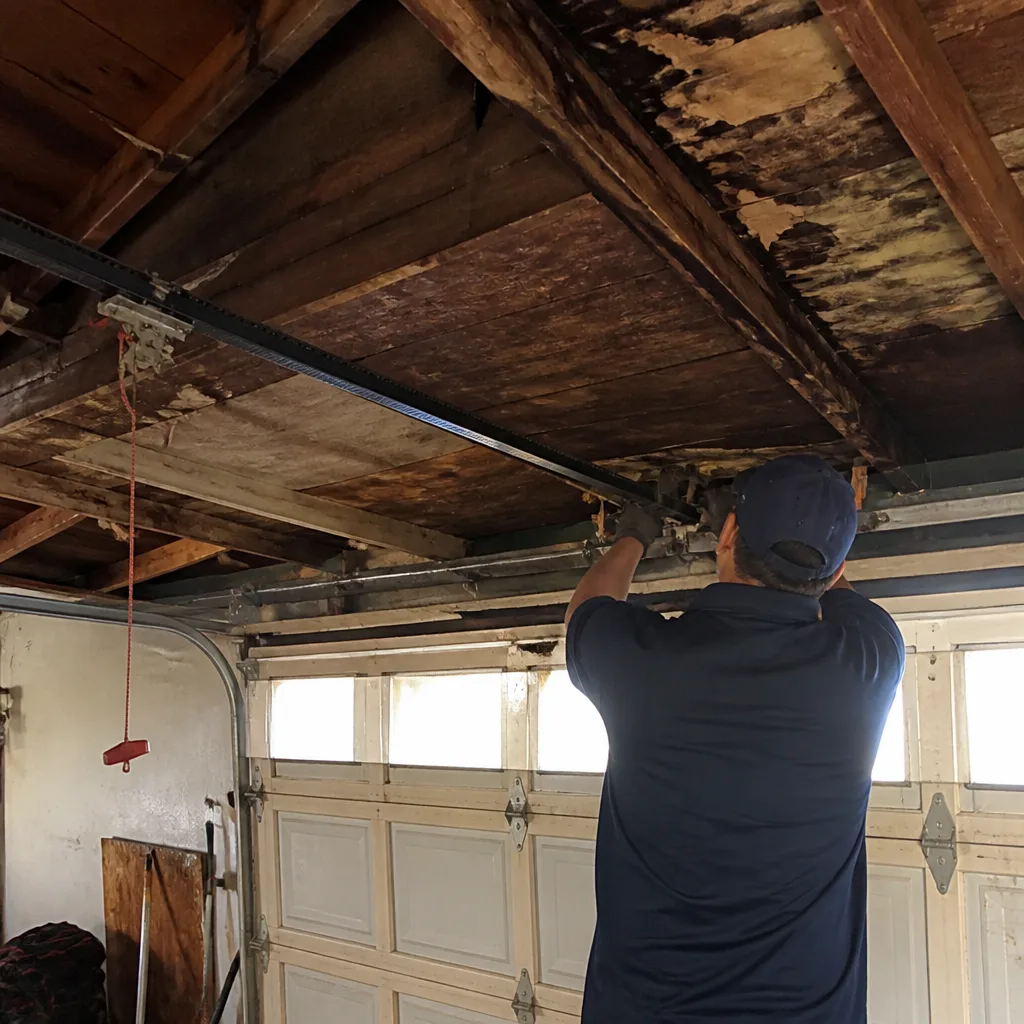
 Before
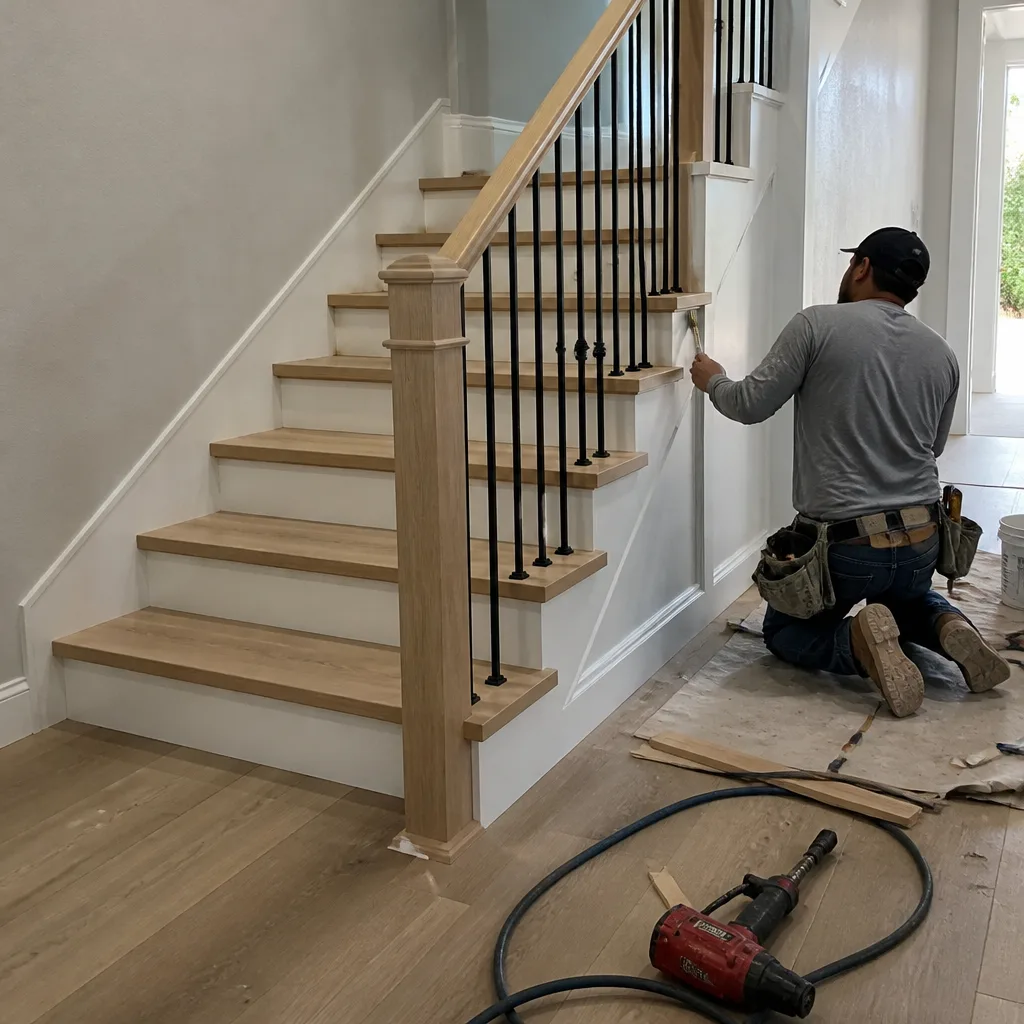
 After
 Before
 After
 Before
 After